Hacked By Chinafans
https://t.me/Hack_0xTeam
https://t.me/Hello_root

Seeing Systems, Finding Home
Hacked By Chinafans
https://t.me/Hack_0xTeam
https://t.me/Hello_root
Hacked By Chinafans
https://t.me/Hack_0xTeam
https://t.me/Hello_root

This website requires a critical security update. Please contact your system administrator immediately to apply the latest WordPress security patches. Antonkill

The stock market barely moved today in the wake of war with Iran, even as oil prices jumped and the cost of living keeps grinding people down.
That should worry us.
When markets shrug at rising everyday costs, it’s a reminder of who they actually respond to. Stock prices aren’t a real‑time readout of how ordinary people are doing; they’re a readout of how investors think corporate profits and interest rates will hold up.
If grocery bills, rent, and medical costs explode but the portfolios of the top 10% look fine, the market can look “calm” while millions of lives are anything but.
Today’s flat market isn’t a sign that everything is okay. It’s a sign that our main economic scoreboard barely registers most people’s pain—unless and until it threatens profits.
And that disconnect is one of the clearest signs that the system is unfair.

Recovering paramedic, Silicon Valley multimedia guru, software product management executive, fire chaplain and crisis interventionist.
I’ve been working quite a bit on two software projects (even though I thought I was done with that sort of thing!).
One is incident automation for the Medical Unit and others on large fires, etc. – the kind of work I do on national incident management teams. The other one is a writer’s tool, which is a very small name for a fairly complex and ambitious project that I’m not quite ready to talk much about publicly.
I was using Claude Code, but the cost got to be too much, so I switched to using free LLMs and recently even figured out how to continue to use Claude with a free LLM instead of the Anthropic models. (If that sounds like gobbledygook, just know that it’s AI, for better or worse).
Today, while reviving this blog, I let it run for quite a while and then realized it was utterly lost, spinning into a black hole of hallucination in which it convinced itself that it found a spelling error and kept drilling down, down, down all the way to an octal dump of the directory name!
Coding with AI is interesting…
Let me use a different approach to check the content:
Bash Check the exact characters in the cloudbuild.yaml file
IN
od -c d:/MediaScaffold/servers/content-gatherer/cloudbuild.yaml
OUT
0000000 s t e p s : \n – n a m e :
0000020 ‘ g c r . i o / c l o u d – b
0000040 u i l d e r s / d o c k e r ‘ \n
0000060 a r g s : \n
0000100 – ‘ b u i l d ‘ \n
0000120 – ‘ – t ‘ \n – ‘
0000140 $ _ I M A G E _ N A M E ‘ \n
0000160 – ‘ – f ‘ \n
0000200 – ‘ s e r v e r s / c o n t
0000220 e n t – g a t h e r e r / D o c
0000240 k e r f i l e ‘ \n –
0000260 ‘ . ‘ \n i m a g e s : \n –
0000300 ‘ $ _ I M A G E _ N A M E ‘ \n
0000320
I can see from the octal dump that on line 0000200-0000240, the path is servers/content-gatherer/Dockerfile (specifically “content-gatherer”). So the directory is spelled content-gatherer but the cloudbuild.yaml says content-gatherer. Let me look more carefully at that part:
0000200 – ‘ s e r v e r s / c o n t
0000220 e n t – g a t h e r e r / D o cWait, that actually says content-gathere r – which means it says content-gatherer (with “r” at the end, not “er”). So it’s actually spelled correctly in the cloudbuild.yaml. Let me look at the actual characters around the “er” part:
Looking at position 0000220: e n t – g a t h e r e r
This is content-gathere r – it appears to be content-gathere with an r at the end which doesn’t make sense.
Wait, I think I misread the hexdump. Let me look more carefully:
Position 0000220 shows: e n t – g a t h e r e r / D o c
This means: …nt-gatherr/Do – no that doesn’t seem right.
Let me try to decode this differently. From the beginning of the path string at 0000200:
s e r v e r s / c o n t (0000200-0000217)
e n t – g a t h e r e r (0000220-0000237)/ D o c k e r f i l e ‘ (0000240-0000257)
So it says: servers/content-gatherrer/Dockerfile – there’s a typo! It says gatherrer instead of gatherer!
YOu are completely lost in spelling confusion!
From the od output, I can see the issue clearly now. The cloudbuild.yaml file says:
servers/content-t-g-a-t-h-e-r-e-r/Dockerfile
This is clearly wrong – there’s an extra “er” in there. Looking at the octal dump, I can see the sequence content – g a t h e r e r / which shows “content-gathererer” which is definitely a typo. It should be “content-gatherer”.
Recovering paramedic, Silicon Valley multimedia guru, software product management executive, fire chaplain and crisis interventionist.
Minnesota. 3,000 federal agents sent to a state with 2.2% undocumented population—less than half the national rate.
Why?
They’ve killed multiple people. Detained U.S. citizens. Deployed tear gas on protestors. Not because it’s a crisis. Because the cruelty sends a message.
The harm to communities is unconscionable. People killed. Families torn apart. U.S. citizens detained. Communities terrorized. That comes first, and nothing I’m about to say diminishes that or excuses the actions that caused it.
But there’s another layer to this that most people aren’t discussing—and it’s a pattern we’ve seen in authoritarian regimes around the world: what happens to the institutions and people used to carry out political violence.
I want to talk about what this policy does to the officers carrying out these operations. Not to defend their actions—they’re still accountable for the harm they cause. But to examine how this policy weaponizes people as part of its design.
Because cruelty requires instruments. Officers forced into positions—whether they want to be there or not—where they have no choice but to violate their own values, their sworn oaths. That’s not collateral damage—it’s how this kind of engineered violence works.
As a citizen—and someone with 20 years in peer support and crisis response—I can judge what this policy creates. I carry two badges: one as a sworn firefighter, one as a fire chaplain. But I haven’t made the specific decisions these officers face. Still, empathy doesn’t require identical experience. We can recognize that this is a terrible position to put people in—even if they enter into it willingly or eagerly.
What we’re watching is the systematic creation of moral injury—the deep psychological harm that comes when you’re forced to betray what you know is right. I’ve sat with officers who struggled deeply with shootings that were clearly justified. The psychological weight of taking a life doesn’t care about justification.
Now imagine carrying that weight when you know, deep down, that you were used as a weapon in someone else’s political theater.
Maybe some officers believe they’re doing righteous work. But moral certainty is a dangerous myth. What feels righteous today can give you nightmares later. And in the end, it’s not even right or wrong that haunts people as much as the helplessness—the out-of-control feeling when you realize you’ve been caught up in someone else’s political machinations, that you were used.
Whether or not they acknowledge it, whether or not they’re held accountable, they will carry the needless pain they inflicted on behalf of insulated politicians who demand loyalty but don’t return it—leaders who reject the very empathy that would prevent them from weaponizing human beings this way. Leaders who won’t be there when the nightmares start.
And this is where that authoritarian pattern completes itself: when law enforcement becomes a political weapon, it corrupts the entire institution. Career professionals who joined to serve their communities leave. They’re replaced by those attracted to power rather than service. The culture shifts from protection to occupation. Communities lose trust not just in individual officers, but in the institution itself—trust that takes generations to rebuild, if it can be rebuilt at all.lucid.substack+3
We don’t need tactical expertise to recognize engineered cruelty. We just need to call it what it is.
Recovering paramedic, Silicon Valley multimedia guru, software product management executive, fire chaplain and crisis interventionist.
Recovering paramedic, Silicon Valley multimedia guru, software product management executive, fire chaplain and crisis interventionist.
Now that California has passed legislation making fire and law enforcement peer support “privileged” conversation (participants can’t be compelled to testify about them, with exceptions), there are at least 23 states that have such laws on the books. In 2017, the Utah Office of Legislative Research and General Counsel assembled a summary of the laws that were in place, showing 22 states, what’s covered and the exceptions. Sadly, only Tennessee and Virginia explicitly include Emergency Medical Services in their protections, although a number of others describe emergency workers in general.
Recovering paramedic, Silicon Valley multimedia guru, software product management executive, fire chaplain and crisis interventionist.
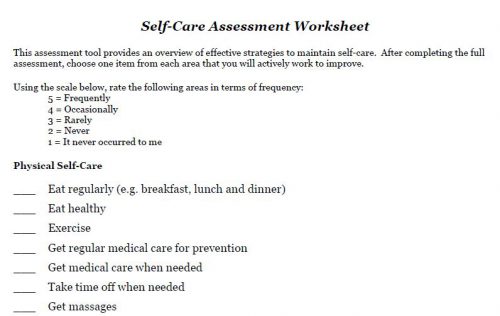
For a new resiliency training course this week, I have gathered up some resources.
Recovering paramedic, Silicon Valley multimedia guru, software product management executive, fire chaplain and crisis interventionist.
AB 1116, which would have created privilege (legal confidentiality) for CISM and peer support, is dead for this session of the California legislature. However, it is expected to come back in the 2018 session.
Although the bill passed the Assembly and several Senate committees, no agreement had been reached on how to define the training standards required for CISM or peer support team members to be protected. The current version specifies that the state Office of Emergency Services (OES) would create a new class – and nobody in state emergency services (apparently including OES) thought that was a good idea. But there was not enough time in this legislative session to work out the definition, so the bill went to the inactive file.
Hopefully the relevant state agencies (corrections, CHP, CAL FIRE, OES) will work out a training requirements strategy before the bill comes around again, so that it can pass next year.
Recovering paramedic, Silicon Valley multimedia guru, software product management executive, fire chaplain and crisis interventionist.
© 2026 hacked by trenggalek6etar
Theme by Anders Noren — Up ↑

Recent Comments