Seeing Systems, Finding Home

Tag: stress (Page 1 of 2)

Living Disconnected

Excerpted from “Stress Into Strength: Resilience Routines for Warriors, Wimps and Everybody in Between.”


Don’t beat yourself up for feeling stressed, anxious, and not resilient enough – you are far from alone. Although we are living in the most technologically connected culture that has ever existed, many of us are sorely lacking habits that address isolation, inactivity, and meaninglessness. Many are so disconnected from stress recovery that they don’t even know what is missing. They just know they are anxious and saddest of all, lonely — some profoundly so.

City, People, Street, Night, Lights, Man, Dark, Lonely


An astonishing 40 percent of American adults report feeling lonely. Millions of people, especially men, have zero close friends. Loneliness rates have doubled since the 1980s. Ask a therapist what problems walk into their offices each day and you will hear that loneliness and anxiety top the list, by far.

Loneliness is lethal. Researchers have found that it dramatically raises heart disease and stroke rates, increasing your risk of early death by 30 percent, taking an average of 10 years off your lifespan. It is also expensive – the U.S. government spends an estimated $6.7 billion annually to address social isolation in older adults. Vivek Murthy, the former U.S. Surgeon General, says that the most concerning health issue in the United States is not cancer, heart disease or obesity. It is isolation.

Our disconnection is not just social. We have also abandoned routines for physical and spiritual exercise and recovery. Compared with our predecessors, we work out less, eat worse, get less sleep, gain more debt, pay to store more stuff, and generate more trash. We are more cynical, less inspired, and motivated. We skip reassuring rituals and “go it alone” rather than be mentored or mentoring, while allowing money and power to trump morality.

Trapped in the perpetual stress of fearing stress, while disconnected from sources of recovery, we become increasingly reluctant to take on the challenges that we need to stay strong, grow and bounce back after adversity.

Every one of the social and psychological causes of depression and anxiety… has something in common. They are all forms of disconnection. They are all ways in which we have been cut off from something we innately need but seem to have lost along the way

Johann Hari

We tolerate disconnection because it can yield a certain success – for a while. Compromising social and family life, workouts, and values, allows us to work long hours, make money and get promoted, gaining power and prestige. This doesn’t end well. Eventually, life presents difficulties that cannot be solved with money or power (although they enable formidable distractions).

Past generations had more stress recovery built into daily life. Shared meals, entertainment and work were the norm. Long commutes were impractical, schools and jobs were local, so people worked and went to school with friends and neighbors. Less automation and more expensive energy demanded more activity. Processed and junk food were less available. Churches and social clubs, now starving for members, were part of the majority’s lives, solidifying community connections.

Today, we have the most powerful information-sharing system in history, the Internet. However, our negative bias is at home there; most of what we share and read is shocking news, gossip, and posturing, poisonous to healthy relationships.

Research shows that the same content in an email and in in-person dialogue sounds less polite in the email.

Amit Sood

We face new threats – global terrorism, mass shootings, job insecurity, enormous debt, climate change. Institutions — political, religious, academic, media — have lost much of their trust and authority. Greed, extremism, and scandals have created a void of wisdom, meaning, values, morality, and purpose. Few cultural leaders have hesitated to capitalize on fear, amplifying our stress reactions and feeding the vicious cycle of disconnection.

Threatened by modern fears, adrift and uninspired, we naturally react with fight-or-flight. Some fight by trying to become more self-sufficient; these are the libertarians and “preppers,” expecting apocalypse. Others flee via distractions and indulgences to mask worries and helplessness; illness, addiction and bankruptcy too often result. As long as we keep fighting and fleeing, disconnection deepens.


We are not likely to forget that we sometimes must fear or distrust strangers. We need to know, thoroughly and intuitively, that although some people will neglect, reject, and hurt us, we are not alone. We need to care and be cared for.

We are unlikely to forget that the universe has diseases and dangers that can injure and kill us. We need to know, thoroughly and intuitively, that the physical world is our home, nourishing and sustaining us. We are creation’s beneficiaries and stewards.

Few of us will forget that we are far from perfect. We need to know, thoroughly and intuitively, that we are forgiven and accepted as we are, one body of humanity even as we are individuals.

More than we need reminders of what to fear, we need to give and receive reminders of gratitude and generosity. We need five or ten reminders of what’s good in life for every reminder of what’s not.


Deep disconnection – having little or no sense of belonging just as you are – makes isolation, physical pain and meaninglessness feel permanent or intolerable. Dysfunction and addictions follow.

In this environment, calls for “trigger warnings” (which research suggests don’t work) and bans on “micro-aggression” are not surprising. If you see stress as a problem to avoid, it makes sense to hold others responsible for causing it. However, your difficulty coping probably has far less to do with their behavior and is more the result of disconnection from sources of recovery, healing and growth.

A culture of avoiding stress weakens everyone. “Stress-free living” is an oxymoron. When we advocate the goal of eliminating stress, we should not be surprised at the rise in addictions, distractions and the ultimate “stress reduction” — suicide, which has risen 24 percent in the last five years.
Resilience routines are antidotes to fear-based thinking and acting because they nourish and strengthen us in body, mind, and spirit. They can help you heal from the past, cope with the present and prepare for a better future.


To thrive in the 21st century, we must be more intentional about connection and recovery from stress than our parents or grandparents. We need to discern what truly threatens us and what does not, replacing the vicious cycle of fear, distraction, and disconnection with a virtuous cycle of connection and recovery.

It would be unfair to make these observations without acknowledging that racism, discrimination, circumstances, and privilege result in uneven opportunities to make the kinds of connections that build resilience. If you are struggling for basic survival, resilience routines may seem out of reach. If you are working multiple jobs just to make enough to pay the rent, eating well, getting exercise, and getting enough sleep may be impossible. That’s realism. However, resilience also calls for optimism, to have faith that even though the way forward individually is bleak, great transformation happens when many of us take small steps forward. Learning resilience is subversive, ultimately destructive to organizations and institutions that misuse or abuse their constituents.
Taking the Stress out of Surgery – With Amazing Results

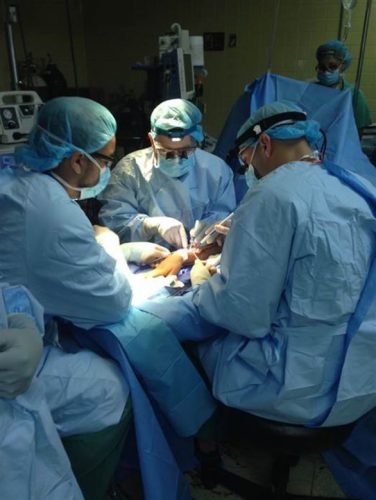
Surgery is stressful. Even before they start cutting into your body, something stressful is going on – a disease or other problem that led to a surgeon’s office. Except for the most minor health problems, most of us have limited understanding of what’s going on, what can be done about it and what the outlook is. “Not knowing is hard,” I frequently say, to acknowledge the stress that arises from lack of knowledge.

I’ve been accompanying my brother on this kind of journey, as he received a scary diagnosis and underwent a big operation (which went even better than we dared hope, I’m happy to say). His surgery took place at Medical Center of the Carolinas, where we learned about a set of protocols called ERAS – Enhanced Recovery After Surgery. As they walked us through its components, I realized that ERAS is all about stress management – both physiological and psychological stress (the two are inseparable, but we sometimes forget that).

Here are the startling results when a hospital implements ERAS. Stay time drop up to 30 percent, complications drop by up to an astonishing 50 percent and your chance of dying drops similarly. Wow. (I will never have surgery in a hospital that hasn’t adopted ERAS.) One study showed that for a big, open abdominal operation like my brother had, ERAS reduces the recovery time and complications to about the same as if they’d operated laparoscopically (through tiny incisions). As a result of shorter hospital stays and fewer complications, costs go down, often dramatically, which is good for everyone.

Like other kinds of stress management, ERAS starts with education. On our first visit with the surgeon and team, they took their time, gave lots of information and patiently asked for and answered all of our questions. None of the rushing in and out that seems to be so often the norm in medicine. Surprising, considering that his surgeon is so skilled that people come from all over the world for his care.

We were asked to take a “class” (only the two of us were in it), where a nurse quite patiently walked us through all of the possible procedures the surgeon might have to do. She stepped through each post-op day of recovery, detailing what he would be eating, when he’d get out of bed (almost immediately), goals for each day (walk this far, eat this kind of food) and so forth. Even though it was a ton of information, the result was that we had an good picture of all of the possibilities and what they would mean in terms of recovery and possible tubes and drains they might have to put into him. Knowledge reduces stress.

One of the surprises was that ERAS does away with the ban on eating or drinking just before surgery. Although he needed to skip breakfast, they gave him two bottles of high-carbohydrate drinks. One was for the night before surgery, the other was for a few hours before. If you know much about stress, you are aware that it messes with your body’s endocrine system – blood sugar and related hormones. ERAS addresses the physiological stress response by carb loading prior to surgery – much like marathon runners do – and careful blood sugar monitoring afterwards. All of the education also undoubtedly helps manage those levels, since psychological stress also raises your sugar, cortisol and other “stress hormone” levels, which ultimately slow down healing and eventually cause health issues.

ERAS also includes pain management protocols because pain provokes your mind and body’s stress response. When ERAS is used, patients need less pain medication. ERAS even addresses simple things like ensuring that patients are kept warm. There are other, more medical aspects to ERAS (such as preventing blood clots), which aren’t as directly related to minimizing stress response.

The hospital also makes available an app, SeamlessMD, which coaches patients through all of this. I was impressed when I saw that its very first suggestion is to rally your social support. In virtually every study, social support is the most important factor in bouncing back, mitigating stress and thriving under pressure

In short, ERAS encompasses information, nutrition, exercise, social support – these are always the ingredients for resilience and thriving under stress. The big takeaway for me is to reinforce that stress is always physical, mental and spiritual. They cannot be separated. If we want to be more resilient, to thrive under stress and bounce back fast when life tosses us challenges or threats, we need to address mind, body and spirit.

Yes, spirit, also. Although ERAS doesn’t directly address what we’d normally think of as spiritual concerns, it implies a set of values consistent with our spiritual needs. ERAS calls upon hospital staff, patients, their families and friends to be generous with their time, knowledge and support. Although that’s not explicit or part of the research I reviewed, I have no doubt it affects outcomes a great deal.

On Becoming a Wildland Firefighter at 60

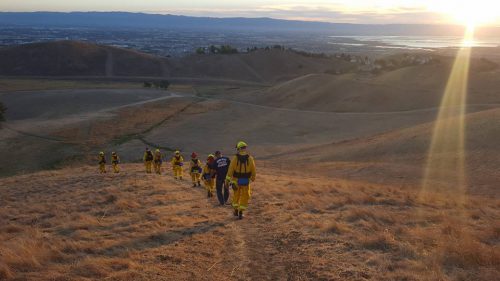
Friends who know me as a software and intelligence product manager and executive have asked how I ended up doing wildland firefighting with Spring Valley Fire Department. Believe me, I’ve asked myself the same question. It tends to pop into my head in situations such as hauling a 45-lb. pack up a steep hill in 90 degree weather and the air filled with smoke. I joke that that’s when I question my life choices. (Okay, it’s not entirely a joke.) Here’s how it happened.

Public safety is not new to me. I took a break from college decades ago and worked a few years as a paramedic. When I returned to school, I volunteered with the Salvation Army’s Emergency Disaster Services, which included feeding and caring for firefighters in Pittsburgh and surrounding areas. One of my friends from that group was a volunteer firefighter who was killed in the line of duty. His funeral had a profound effect on me, particularly the words, “Greater love has no one than this, to lay down one’s life for one’s friends” (John 15:13).

Fourteen years ago I found myself at another line-of-duty-death funeral – for our niece’s husband, a U.S. Marine who was killed in action in Fallujah, Iraq. That helped me realize that I was still carrying a heavy “stress backpack” from things that happened long ago. I met Janet Childs, the director of the Bay Area Critical Incident Stress Management Team (CISM), who helped me begin to let go of some of that weight. I accepted her invitation to join the team, received training and began volunteering in crisis intervention.

One of our CISM team members, who became my mentor and spiritual director, was serving as a fire chaplain for a large agency. When he decided to step down, he asked if I would replace him. After a couple of weeks of debating, I said yes. During my chaplain training, I became friends with members of the CAL FIRE Employee Support Services team. I was part of a group of chaplains who responded to the Rocky Fire in Lake County in 2015. The enormous Valley Fire, also in Lake County, started a short time later and CAL FIRE hired me as a contractor for peer support.

After the Valley Fire, I decided I wanted more wildland fire training, for safety’s sake, so I joined the local CAL FIRE Volunteers in Prevention program. Our duties include operating a mobile command vehicle (I have a ham radio license, which is part of skills required), staffing the Copernicus Peak fire lookout tower (the highest point in the Bay Area, a wonderfully relaxing place) and various public relations events.

Meanwhile, satisfying jobs in product management seemed to become much more difficult to find. I’m most at home in smaller companies and turn-around situations. The problem with those is that the company will nearly always either outgrow me or fail. Either way, I was getting laid off every few years. At some point, I decided that I was done with the high-tech industry, at least as a product guy. I am looking at bringing stress management and resilience wisdom from public safety into the private sector. It’s needed.

Ten years ago, I first met Spring Valley Fire Department, which protects about 200,000 acres of wildland east of Milpitas and San Jose. I led a critical incident stress debriefing for firefighters involved in a difficult response to a traffic accident. The debriefing became horribly memorable – I had asked a Santa Clara County firefighter to assist me, but he decided he needed a “mental health day” instead. While we were doing the debriefing, while bicycling, he was struck and killed by racing motorcyclists.

I joined Spring Valley last spring after talking to a couple of the chiefs while I was recruiting for the CAL FIRE VIP program. Since CAL FIRE was hiring me periodically for peer support at big fires, I wanted more training and experience with wildland fire. I didn’t realize that although Spring Valley is primarily a volunteer fire department, our firefighters can work for pay covering CAL FIRE stations when extra help is needed. (This year, a whole lot of help has been needed compared to past years.) I jumped at the opportunity. Meanwhile, I’ve also qualified as a federal firefighter/EMT to be able to work as a fireline EMT for Wilderness Medics, but I’m still waiting for my first assignment.

Along the way, I published the Pocket Guide to Stress Management and Crisis Intervention, which is now used by hundreds of public safety agencies, became an instructor for CISM, CPR and related topics, and I’m working on a book titled “The Resilience Recipe.” I’m thinking the subtitle might be “Your Brain Will Do That,” because it is mostly about how our brains respond to stress and trauma, and what they need in order to bounce back (spoiler – we need physical, social and spiritual connections).

Those are the events that led me here. At the risk of boasting, I’ll say that it’s been difficult, physically and mentally. Wildland firefighting is extremely demanding – we have to be able to do hard work in extreme conditions. At 61, it was no easy task to get in shape to be any good at all (and I won’t pretend that I’m anything more than adequate). To qualify for federal incidents, I had to pass the “Arduous Work Capacity Test” – hike (no running) three miles in 45 minutes carrying a 45-lb. pack. Although it’s not that difficult for a young person in good condition, the first few times I tried it, I wondered if I would ever get there.

When I look back at the physical training I’ve maintained over the last two years – typically hiking 2-3 miles with a heavy pack at least every other day, weight training at the fitness center every other day – I’m somewhat amazed. Although I was a backpacker and rock climber in my 20s and biked to work for a while, regular exercise was never much more than the thought, “I should do that one of these days.”

To be honest, I was somewhat scared into this self-disciple. A couple of years ago, to my surprise, a routine physical showed that I was pre-diabetic. The exercise has really paid off – my blood sugar is nearly normal and my doctor says I’m the healthiest 61-year-old he has seen. That doesn’t mean I can keep up with the 20- and 30-year-olds I’m working with, but I hold my own. And I keep looking for ways to do better. For motivation, all I have to do is recall hiking up a steep hill with a heavy pack at a fire.

In my writing and teaching, I’m focusing on resilience – our ability to bounce back from adversity. I’ve learned that stress and trauma are enemies of resilience because the “alarm center” in our brains, triggered by stress, will drown out our sources of willpower and motivation unless we do things to quiet it.

Without everything I’ve learned and done about managing stress and unpacking the trauma backpack, I’d never have been able to stick to the discipline that has enabled me to beat back diabetes and become a wildland firefighter/EMT at nearly 62 years old.

A resilience framework – connecting up, down and around

All of us are surrounded by sources of strength, resistance and resilience.  The better connected we are, socially, physically and spiritually, the more stress and challenges we can handle.

You’ll see this theme repeated in my classes and writing. For example, last month, I mentioned “Look up, look down, look around,” which is a wildland firefighting safety lesson about watching out for danger, which inspired this way of looking at resilience. In my pocket guide, Stress Management and Crisis Intervention, the theme of connecting in three dimensions repeats – out, in and up; mind, body, spirit; attitudes, activities and values.

Look around and you see social support, which psychologists repeatedly find has the strongest correlation to our resilience under stress and after trauma. Our co-workers, friends, family, mentors and other supportive people are our first line of strength when challenged or psychologically injured.

Look down and you see your body and the earth – your physical presence in creation. Through activities like yoga, exercise, sports, singing and dancing, we build and maintain connections to ourselves and the physical world. Our minds and bodies are inseparably linked when it comes stress. For example, science has found that a physical measurement, heart rate variability (HRV), correlates to both psychological and physical resilience. HRV is amazing in one respect – it doesn’t just measure your resilience, you can actually improve your ability to handle stress through biofeedback that increases your HRV. If that doesn’t convince you of how intimately our minds and bodies are linked, nothing will.

Look up and be reminded that the universe is vaster than we can comprehend, that as much as we can and should try to dissect and understand it, awe and mystery transcend logic and rationality. Spirituality in this context has to do with values and meaning, which often comes from religious beliefs.

(I included links to the Mayo Clinic web site because unlike so many stress management books and articles, they offer advice that embraces all three dimensions. Their books on stress and resilience are among the few that I recommend.)

When you are connected to these sources of strength and resilience, you know them – and they know you – with your body, heart and spirit. This is a kind of knowing that is beyond familiarity, information or even wisdom. It is a knowing that only arises from living in true relationships. It is knowing the way you know your spouse, your work, your community, your beliefs. This is the knowing that you can never completely put into words.

Looking at resilience as the result of our connections is simple and powerful. It explains our hunger for social media, as well as why it doesn’t truly satisfy (the connections are shallow and often deceptive). It shows why one-dimensional “stress management,” which usually focuses only on the physical, rarely succeeds. It helps us know where to focus when our resilience is low.

The biggest obstacle to connecting is distrust, especially when that distrust was learned at a young age. We all learn, to some extent, that we cannot trust other people, the universe or the divine, so we disconnect and become wary. If we have been deeply betrayed, some of these connections can seem threatening, even terrifying.

Distrust keeps us stuck in the “Ds” – discipline, domination, deception, drama, delay, docility, demandingness, or defiance. We are stuck socially when we don’t have people we can be real with. We are physically stuck when our health prevents us from exercising or experiencing nature. When forgiveness seems out of reach, for ourselves or others, we are spiritually stuck.

When we see and choose how to restore and nurture our weakest connections – which can be very difficult – we move from the “Ds” into the “As” – accepting, accompanying, attending, allowing, authenticity, affection, and agreement. The essence of resilience is how well we build and maintain the attitudes, activities and values that feed these qualities.

What Hiking Does To The Brain Is Pretty Amazing

Michael W. Pirrone reports on Wimp.com about new studies of the effects of hiking on the brain.

Excerpt: “According to a study published last July in Proceedings of the National Academy of Sciences, a 90-minute walk through a natural environment had a huge positive impact on participants.”

The article reports that hiking in nature lowers brooding and obsessive worry, increases creativity, helps you focus, gives you energy and strong self-image.

From Quora: Is there a way to make yourself immune to PTSD?

I wrote the following in response to a question on Quora.

Although all of the reasons PTSD develops are not understood, the first thing to keep in mind is that it is a spectrum. For many people it is usually mild and manageable, although it can become quite uncomfortable (or just tiresome) when it is triggered. Realize that hundreds of thousands of public safety workers, who don’t fit any of your categories, live and work with PTSD. Many go though most of their days without giving it a thought.

One of the strong correlations to PTSD risk is how much REM sleep you get. A person who isn’t getting good REM sleep, due to sleep apnea, alcohol or drug use, or anything else that prevents them from dropping into that deeper sleep, is at higher risk. The theory is that our brains consolidate memories during REM sleep, so that we we essentially forget the emotions along with the event. (PTSD is sort of like “remembering” – or re-living – the emotions separately from the event.) There is a good argument that energy drinks and other substances that improve memory also can increase your risk, simply because they improve your memories of the bad event.

It is a mistake to decide if you “should” have a post-traumatic stress injury, based on what happened. “Should” is a word to get rid of in this context. What matters is how you reacted. I meet with people who witnessed or experienced terrible things, but they don’t have a strong reaction – they didn’t feel particularly helpless or out of control. They may not need any intervention at all, even though the incident would have been traumatic for many other people. But the converse is true – a person can experience extreme feelings of helplessness and out-of-control from a seemingly “minor” event and have a significant post-traumatic stress injury. Although those events usually involve loss of life or the threat of it, serious injury, etc. , the common factor is the reaction, not what happened.

There is absolutely nothing in the news article that would indicate whether or not someone involved might be at risk for PTSD. Again, the facts of what happened are not very important; your perception of what happened, along with physiological factors and what else you may have experienced previously (prior trauma can set you up for a more serious injury) all contribute.

I often invite people in your position to say this to themselves: “My stress is the worst stress because it is MY stress.” Comparing yourself to others – especially based only on the facts – is always a mistake (“No comparison stress shopping.”)

Be gentle with yourself. Be as gentle with yourself as you would be with a friend who had the same reactions.

I doubt there is any guaranteed way to become immune to PTSD, but if you aren’t getting good REM sleep and can make changes to do so, that almost certainly will help. Social support has also been shown to correlate to reducing the impact of traumatic events. Connecting with your body and nature – things like meditation, yoga, hiking – also help to activate the part of your nervous system that tells your “fight or flight” response that it is safe to de-activate. Spirituality, in the sense of having bigger-than-self values, also seems to help.

Stress doesn’t have to be toxic. Kelly McGonigal (“The Upside of Stress”) gives a good summary of this in her TED Talk. Watch to the very end, where she gives a great bit of advice: “Chasing meaning is better for your health than trying to avoid discomfort.”

The danger of “nobody else can understand”

If you are in public safety or the military, as well as some other fields, you know that some people insist that there it is pointless to talk about work to any “outsider.” Often, big agencies have this attitude toward smaller, less busy, ones –  “We are the only REAL firefighters, police, medics, etc., around here.” So they close themselves off from  support by people who otherwise might be peers.

The walls even go up within agencies – specialized, elite teams form a “tribe” mentality that says if you haven’t been part of a similar unit, there’s no point in talking to you about stresses and challenges, even if do the same kind of job.

No doubt, there is some truth to this. Working at a big, busy, urban agency certainly is different from smaller ones. Combat experience absolutely has unique aspects. Being part of an elite or specialized team really is different. People who haven’t walked the walk truly cannot understand. Experience is the only instructor – words quickly fail if we were to try to fully communicate it, especially the emotions around high-stress events (which can directly impact the brain’s speech center).

For a number of years, I have suspected that organizational isolation – that’s this is about – could be as toxic as individual isolation. We know that social support is the most important factor in resilience under stress or recovery from trauma; isolation aggravates stress. In fact, almost any trauma expert will agree that people will continue to suffer as long as they remain isolated –  connections with others give us strength and healing.

I recently began reading Ellen Kirschman’s book, I Love a Fire Fighter: What the Family Needs to Know, which has been sitting on my nightstand for a while. Dr. Kirschman, a well-regarded therapist in public safety, is also regularly involved in the West Coast Post-Trauma Retreat, where I have volunteered and learned.

Here’s the light bulb that went off as I read Kirshman’s introduction – the “nobody else can understand” attitude cuts us off from our friends and family. If you are certain that even a co-worker who isn’t part of your elite unit can’t support you because “they don’t understand,” then how can your friends and family who are civilians, possibly support you?

Here’s one of Kirschman’s observations about going through a fire academy (emphasis mine).

No one acknowledged how the emotional courage fire fighter families need or the independence that is forced on them contributes to the fire service mission. This is extremely puzzling in light of the many studies that confirm how family and friends are the heart of a fire fighter’s emotional support system.

Her books (she wrote a similar one for law enforcement) are for families, but the message to public safety is just as important. Your social support outside of work is also critical to your strength and resilience in the face of occupational stresses, and recovery from critical incidents and other injuries that aren’t physical.

The following words are why it does not matter that outsiders can’t understand the job.

Empathy does not require understanding.

It’s true – if you are an outsider, you will not understand. If you’ve never been there, I can’t explain what it was like to talk to a patient one minute and then do CPR on him, unsuccessfully, the next. You won’t understand how difficult it was to walk past his wife in the ER waiting room, seeing her comforting another wife, not knowing her own husband was just pronounced dead. If you’ve never done anything like helping a family bury their dogs who couldn’t escape a wildfire, nothing I can say will make you understand. If you haven’t been part of a rescue that went all wrong and killed the victim, I don’t have words for the emotions. If you haven’t done shift work, you don’t know the toll it can take.

Even if you cannot understand, that doesn’t have to stop you from supporting a responder if you are a trusted friend – because empathy does not require understanding. They may spare you details. They probably won’t repeat the sick jokes that helps many get through the day. But if you are willing to simply walk beside them, your presence can be healing.

You don’t need to understand responder experiences to know that they are painful. You don’t have to work shifts to that it is hard to be exhausted and miss family events. Everyone has experienced pain and frustration, he stress of an event or life going out of control. Co-workers can appreciate it more than outsiders, so co-workers are an essential part of any responder’s network of social support. So are spouses, friends with completely different careers, pastors and may others.

Camaraderie is powerful. Every agency – and groups within them – benefits from friendships, mutual support and teamwork. However, the idea that only our co-workers or people like them can support us is a misguided obstacle to wellness. We should not want anyone, from new recruits to  seasoned veterans, to believe that their friends and family have little to contribute. As Ellen Kirschman says, that idea cuts t them off from the heart of their social support system.

Paramedics with social support sleep better

An article in the Journal of Occupational Health Psychology earlier this year described a one-week study of paramedics’ sleep and their social support. Those who saw themselves as having more social support reported better sleep. The researchers also observed that the sleep quality of paramedics who perceive more support isn’t as impacted by job stress.  On the other hand, they reported “Those with low levels of support displayed poor sleep quality in the face of high occupational stress.”

In recent years, it has become quite clear that good, deep sleep is vital for coping with stress – poor sleep is associated with increased risk of developing PTSD.  The correlation between social support and coping with stress has also been observed repeatedly in studies. It’s unsurprising to find a link between social support and sleep quality – this reinforces the importance of both.

News report: Meditation reduces stress, changes your brain

Many studies have shown that meditation can be a powerful way to reduce anxiety and raise the body systems that calm us down after exposure to stress. The Washington Post last May reported findings of Sara Lazar, a neuroscientist at Massachusetts General from brain scans that showed that some parts of the brain expanded and others became smaller after sustained meditation.

This is part of a big change in thinking about our brains, which until recently were assumed to be fixed, unchangeable. Now we we have a word for the brain’s ability to change – neuroplasticity – as well as increasing evidence about what kinds of attitudes and activities encourage positive changes.

We should stop teaching “eustress and distress”

Stress management often teaches that there are two kinds of stress – distress, which is what we usually think of as stress, and “eustress” – stress that is good for you. The idea of eustress – the word itself – came from Hans Selye, a pioneer in understanding how our bodies respond to challenges. Selye was an endocrinologist, focusing on hormones and the systems that regulate them.

One of Selye’s great insights is that when we experience a change or other challenge, we will have a physical stress reaction, whether we see it as positive or negative. For example, graduation from high school or college – an event the graduate certainly considers positive – is stressful. And of course it is – a fresh graduate faces uncertainty about what will happen next. Their social support network, a key source of resiliency,  is disrupted as they lose touch with classmates.

Selye’s fundamental insight, that both positive and negative events are stressful, has been demonstrated to be true in many, many research projects. Cognitive neuroscience is unveiling more of the mechanisms and complexities of our physical and emotional responses to stress.

Talking about “distress” and “eustress” is confusing. Psychologists use them because in casual talk, ee use the word “stress” to refer to both the cause and our reaction. “Graduation is stressful” and “I’m stressed about graduation” are both reasonable sentences, but they are saying two different things. The first is about what happened, the second is the graduate’s reaction to it.

Let’s swap in the other words. “Graduation is distressing me” sounds reasonable, but means the same thing as “Graduation is stressing me.” Let’s try the other one. “Graduation is eustressing me” not only sounds awkward, it doesn’t make any sense, since “eustress” is about the graduate’s reaction.  The accurate way to use the word would be “I am having a eustressful reaction to graduation” – a sentence that could only be pleasing to a psychologist.

Using these words was been based on the belief that the difference between eustress and distress is the intensity of our reaction.  We taught people that too much stress is bad for their health, so we should reduce and avoid stress in order to avoid crossing the line from eustress into distress. Now we know that there is no such line.

In recent years, convincing evidence shows that our perception makes a big difference in how our body reacts to stress. If we see a threat, our bodies react in ways that probably will cause illness in the long run. If we see a challenge, stress becomes our friend, we perform better and don’t undergo the physical reactions that cause health problems.

Our perceptions of whether we are facing a threat or a challenge are influenced by how much social support we have. When we are alone, almost anything will look like a threat. Isolation is toxic to our health. Values and spiritual beliefs also make a difference in whether we perceive stressful occasions as threats or challenges.

Instead of talking about distress and eustress, we should be teaching people that they can handle enormous amounts of stress and thrive, then give them tools – attitudes and actions – that transform how they think and react to life’s challenges.


« Older posts

© 2026 Through the Smoke

Theme by Anders NorenUp ↑