Seeing Systems, Finding Home

Tag: resilience

Living Disconnected

Excerpted from “Stress Into Strength: Resilience Routines for Warriors, Wimps and Everybody in Between.”


Don’t beat yourself up for feeling stressed, anxious, and not resilient enough – you are far from alone. Although we are living in the most technologically connected culture that has ever existed, many of us are sorely lacking habits that address isolation, inactivity, and meaninglessness. Many are so disconnected from stress recovery that they don’t even know what is missing. They just know they are anxious and saddest of all, lonely — some profoundly so.

City, People, Street, Night, Lights, Man, Dark, Lonely


An astonishing 40 percent of American adults report feeling lonely. Millions of people, especially men, have zero close friends. Loneliness rates have doubled since the 1980s. Ask a therapist what problems walk into their offices each day and you will hear that loneliness and anxiety top the list, by far.

Loneliness is lethal. Researchers have found that it dramatically raises heart disease and stroke rates, increasing your risk of early death by 30 percent, taking an average of 10 years off your lifespan. It is also expensive – the U.S. government spends an estimated $6.7 billion annually to address social isolation in older adults. Vivek Murthy, the former U.S. Surgeon General, says that the most concerning health issue in the United States is not cancer, heart disease or obesity. It is isolation.

Our disconnection is not just social. We have also abandoned routines for physical and spiritual exercise and recovery. Compared with our predecessors, we work out less, eat worse, get less sleep, gain more debt, pay to store more stuff, and generate more trash. We are more cynical, less inspired, and motivated. We skip reassuring rituals and “go it alone” rather than be mentored or mentoring, while allowing money and power to trump morality.

Trapped in the perpetual stress of fearing stress, while disconnected from sources of recovery, we become increasingly reluctant to take on the challenges that we need to stay strong, grow and bounce back after adversity.

Every one of the social and psychological causes of depression and anxiety… has something in common. They are all forms of disconnection. They are all ways in which we have been cut off from something we innately need but seem to have lost along the way

Johann Hari

We tolerate disconnection because it can yield a certain success – for a while. Compromising social and family life, workouts, and values, allows us to work long hours, make money and get promoted, gaining power and prestige. This doesn’t end well. Eventually, life presents difficulties that cannot be solved with money or power (although they enable formidable distractions).

Past generations had more stress recovery built into daily life. Shared meals, entertainment and work were the norm. Long commutes were impractical, schools and jobs were local, so people worked and went to school with friends and neighbors. Less automation and more expensive energy demanded more activity. Processed and junk food were less available. Churches and social clubs, now starving for members, were part of the majority’s lives, solidifying community connections.

Today, we have the most powerful information-sharing system in history, the Internet. However, our negative bias is at home there; most of what we share and read is shocking news, gossip, and posturing, poisonous to healthy relationships.

Research shows that the same content in an email and in in-person dialogue sounds less polite in the email.

Amit Sood

We face new threats – global terrorism, mass shootings, job insecurity, enormous debt, climate change. Institutions — political, religious, academic, media — have lost much of their trust and authority. Greed, extremism, and scandals have created a void of wisdom, meaning, values, morality, and purpose. Few cultural leaders have hesitated to capitalize on fear, amplifying our stress reactions and feeding the vicious cycle of disconnection.

Threatened by modern fears, adrift and uninspired, we naturally react with fight-or-flight. Some fight by trying to become more self-sufficient; these are the libertarians and “preppers,” expecting apocalypse. Others flee via distractions and indulgences to mask worries and helplessness; illness, addiction and bankruptcy too often result. As long as we keep fighting and fleeing, disconnection deepens.


We are not likely to forget that we sometimes must fear or distrust strangers. We need to know, thoroughly and intuitively, that although some people will neglect, reject, and hurt us, we are not alone. We need to care and be cared for.

We are unlikely to forget that the universe has diseases and dangers that can injure and kill us. We need to know, thoroughly and intuitively, that the physical world is our home, nourishing and sustaining us. We are creation’s beneficiaries and stewards.

Few of us will forget that we are far from perfect. We need to know, thoroughly and intuitively, that we are forgiven and accepted as we are, one body of humanity even as we are individuals.

More than we need reminders of what to fear, we need to give and receive reminders of gratitude and generosity. We need five or ten reminders of what’s good in life for every reminder of what’s not.


Deep disconnection – having little or no sense of belonging just as you are – makes isolation, physical pain and meaninglessness feel permanent or intolerable. Dysfunction and addictions follow.

In this environment, calls for “trigger warnings” (which research suggests don’t work) and bans on “micro-aggression” are not surprising. If you see stress as a problem to avoid, it makes sense to hold others responsible for causing it. However, your difficulty coping probably has far less to do with their behavior and is more the result of disconnection from sources of recovery, healing and growth.

A culture of avoiding stress weakens everyone. “Stress-free living” is an oxymoron. When we advocate the goal of eliminating stress, we should not be surprised at the rise in addictions, distractions and the ultimate “stress reduction” — suicide, which has risen 24 percent in the last five years.
Resilience routines are antidotes to fear-based thinking and acting because they nourish and strengthen us in body, mind, and spirit. They can help you heal from the past, cope with the present and prepare for a better future.


To thrive in the 21st century, we must be more intentional about connection and recovery from stress than our parents or grandparents. We need to discern what truly threatens us and what does not, replacing the vicious cycle of fear, distraction, and disconnection with a virtuous cycle of connection and recovery.

It would be unfair to make these observations without acknowledging that racism, discrimination, circumstances, and privilege result in uneven opportunities to make the kinds of connections that build resilience. If you are struggling for basic survival, resilience routines may seem out of reach. If you are working multiple jobs just to make enough to pay the rent, eating well, getting exercise, and getting enough sleep may be impossible. That’s realism. However, resilience also calls for optimism, to have faith that even though the way forward individually is bleak, great transformation happens when many of us take small steps forward. Learning resilience is subversive, ultimately destructive to organizations and institutions that misuse or abuse their constituents.


On Becoming a Wildland Firefighter at 60

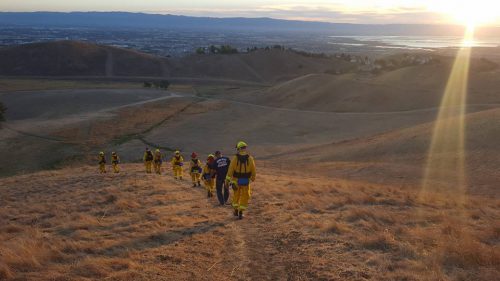
Friends who know me as a software and intelligence product manager and executive have asked how I ended up doing wildland firefighting with Spring Valley Fire Department. Believe me, I’ve asked myself the same question. It tends to pop into my head in situations such as hauling a 45-lb. pack up a steep hill in 90 degree weather and the air filled with smoke. I joke that that’s when I question my life choices. (Okay, it’s not entirely a joke.) Here’s how it happened.

Public safety is not new to me. I took a break from college decades ago and worked a few years as a paramedic. When I returned to school, I volunteered with the Salvation Army’s Emergency Disaster Services, which included feeding and caring for firefighters in Pittsburgh and surrounding areas. One of my friends from that group was a volunteer firefighter who was killed in the line of duty. His funeral had a profound effect on me, particularly the words, “Greater love has no one than this, to lay down one’s life for one’s friends” (John 15:13).

Fourteen years ago I found myself at another line-of-duty-death funeral – for our niece’s husband, a U.S. Marine who was killed in action in Fallujah, Iraq. That helped me realize that I was still carrying a heavy “stress backpack” from things that happened long ago. I met Janet Childs, the director of the Bay Area Critical Incident Stress Management Team (CISM), who helped me begin to let go of some of that weight. I accepted her invitation to join the team, received training and began volunteering in crisis intervention.

One of our CISM team members, who became my mentor and spiritual director, was serving as a fire chaplain for a large agency. When he decided to step down, he asked if I would replace him. After a couple of weeks of debating, I said yes. During my chaplain training, I became friends with members of the CAL FIRE Employee Support Services team. I was part of a group of chaplains who responded to the Rocky Fire in Lake County in 2015. The enormous Valley Fire, also in Lake County, started a short time later and CAL FIRE hired me as a contractor for peer support.

After the Valley Fire, I decided I wanted more wildland fire training, for safety’s sake, so I joined the local CAL FIRE Volunteers in Prevention program. Our duties include operating a mobile command vehicle (I have a ham radio license, which is part of skills required), staffing the Copernicus Peak fire lookout tower (the highest point in the Bay Area, a wonderfully relaxing place) and various public relations events.

Meanwhile, satisfying jobs in product management seemed to become much more difficult to find. I’m most at home in smaller companies and turn-around situations. The problem with those is that the company will nearly always either outgrow me or fail. Either way, I was getting laid off every few years. At some point, I decided that I was done with the high-tech industry, at least as a product guy. I am looking at bringing stress management and resilience wisdom from public safety into the private sector. It’s needed.

Ten years ago, I first met Spring Valley Fire Department, which protects about 200,000 acres of wildland east of Milpitas and San Jose. I led a critical incident stress debriefing for firefighters involved in a difficult response to a traffic accident. The debriefing became horribly memorable – I had asked a Santa Clara County firefighter to assist me, but he decided he needed a “mental health day” instead. While we were doing the debriefing, while bicycling, he was struck and killed by racing motorcyclists.

I joined Spring Valley last spring after talking to a couple of the chiefs while I was recruiting for the CAL FIRE VIP program. Since CAL FIRE was hiring me periodically for peer support at big fires, I wanted more training and experience with wildland fire. I didn’t realize that although Spring Valley is primarily a volunteer fire department, our firefighters can work for pay covering CAL FIRE stations when extra help is needed. (This year, a whole lot of help has been needed compared to past years.) I jumped at the opportunity. Meanwhile, I’ve also qualified as a federal firefighter/EMT to be able to work as a fireline EMT for Wilderness Medics, but I’m still waiting for my first assignment.

Along the way, I published the Pocket Guide to Stress Management and Crisis Intervention, which is now used by hundreds of public safety agencies, became an instructor for CISM, CPR and related topics, and I’m working on a book titled “The Resilience Recipe.” I’m thinking the subtitle might be “Your Brain Will Do That,” because it is mostly about how our brains respond to stress and trauma, and what they need in order to bounce back (spoiler – we need physical, social and spiritual connections).

Those are the events that led me here. At the risk of boasting, I’ll say that it’s been difficult, physically and mentally. Wildland firefighting is extremely demanding – we have to be able to do hard work in extreme conditions. At 61, it was no easy task to get in shape to be any good at all (and I won’t pretend that I’m anything more than adequate). To qualify for federal incidents, I had to pass the “Arduous Work Capacity Test” – hike (no running) three miles in 45 minutes carrying a 45-lb. pack. Although it’s not that difficult for a young person in good condition, the first few times I tried it, I wondered if I would ever get there.

When I look back at the physical training I’ve maintained over the last two years – typically hiking 2-3 miles with a heavy pack at least every other day, weight training at the fitness center every other day – I’m somewhat amazed. Although I was a backpacker and rock climber in my 20s and biked to work for a while, regular exercise was never much more than the thought, “I should do that one of these days.”

To be honest, I was somewhat scared into this self-disciple. A couple of years ago, to my surprise, a routine physical showed that I was pre-diabetic. The exercise has really paid off – my blood sugar is nearly normal and my doctor says I’m the healthiest 61-year-old he has seen. That doesn’t mean I can keep up with the 20- and 30-year-olds I’m working with, but I hold my own. And I keep looking for ways to do better. For motivation, all I have to do is recall hiking up a steep hill with a heavy pack at a fire.

In my writing and teaching, I’m focusing on resilience – our ability to bounce back from adversity. I’ve learned that stress and trauma are enemies of resilience because the “alarm center” in our brains, triggered by stress, will drown out our sources of willpower and motivation unless we do things to quiet it.

Without everything I’ve learned and done about managing stress and unpacking the trauma backpack, I’d never have been able to stick to the discipline that has enabled me to beat back diabetes and become a wildland firefighter/EMT at nearly 62 years old.

Why I now focus on resilience rather than stress

My introduction to Critical Incident Stress Management (CISM) was a dozen years ago. A few months after a heartbreaking line of duty death in my extended familys, I realized that it had triggered incidents I was still carrying in my “stress backpack” from my days as a paramedic. Back then, “Suck it up and move on” was the only recognized coping option. I met Janet Childs, the director of the Bay Area CISM Team and we talked through it. I had no idea that she was anything other than a compassionate grief counselor until she invited me to join the CISM team, which I did.

Since then, I have received enough training and experience – many hundreds of interventions – to become an ICISF CISM instructor. I’ve assisted dozens of public safety agencies, sometimes as a volunteer, sometimes paid, when critical incidents strike. I also have returned to the field part-time as a firefighter/EMT, also in a combination volunteer/paid role.

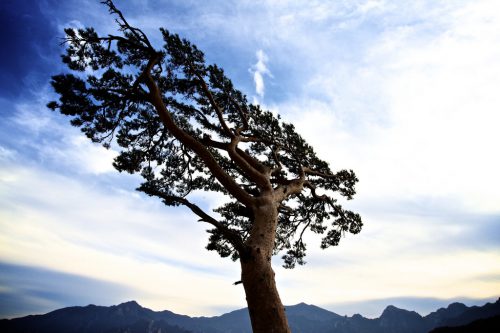
Wind-blown tree

Flexibility is as important as strength.

My view of stress began to change radically at the 2015 fall California Peer Support Association meeting, where one of the speakers (Kirsten Lewis) spoke about and recommended Kelly McGonigal’s book, The Upside of Stress. The very next day, I was back with CAL FIRE friends and colleagues who had been at the conference, responding to the massive Valley Fire began, which had seriously injured several helitack crew members. The things we had just learned made an immediate difference.

  • Stress doesn’t have to be bad for your health. In fact, it is only bad if you think it is.
  • People perform better at many kinds of tasks if they are feeling some stress.
  • It helps to think of stress positively – your brain and body are rising to a challenge.
  • Stop judging your reactions – they happen for a reason.
  • Pursuing meaning is far more important than avoiding stress.
  • “Fight or flight” isn’t the only stress response; we also “tend and befriend.”
  • Caring – choosing to help – creates resilience by activating the tend-and-befriend response.

Resilience and stress can reinforce or tear each other down. Resilient people don’t feel as stressed when life becomes difficult. They may suffer as deeply as others, but they will bounce back faster – and helping people bounce back faster is the primary goal of CISM. On the other hand, experiencing high stress – trauma – lowers our resiliency.

The reason that resilient people don’t feel as much stress is that they see challenges where others see threats. Threats can be physical, social (being excluded) or spiritual (betrayal of values). Less resilient people see permanent and generalized harm – “I’ll never be accepted by others,” while more resilient people think the situation is temporary and specific – “That didn’t work out, but I’ll get over it and try again.”

Seeing challenges instead of threats, which psychologists call “appraisal” is almost surely the reason that stress is only bad for you if you think it is. The idea “stress is toxic” makes it into a threat, rather than a challenge. The idea didn’t even really exist in popular culture until the 1950s, when tobacco companies began funding research intended to sell cigarettes for relaxation, and later to raise doubts about tobacco’s role in cancer and heart disease. “Stress will kill you” has sold a lot of tobacco and pharmaceuticals. But it is only true if you believe it.

When we focus on stress as a bad thing to be avoided or endured, or label incidents “traumatic,” we bring about the very problems we are aiming to prevent – because we push people toward seeing threats when they might have experienced challenges.

If you understand this, the importance of two CISM principles becomes clear:

  • Never intervene based on what happened. Intervene based on how people are reacting.
  • Don’t interfere with natural healing processes. Intervention can make things worse if you send the message, intentionally or not, that the person “should be” traumatized.

After a dozen years focused on stress, I’ve shifted to learning what gives us resilience. I’m not abandoning CISM at all, but by encouraging people to address what is missing from their “resilience recipe,” I believe I can avoid making things worse and be even more supportive.


A resilience framework – connecting up, down and around

All of us are surrounded by sources of strength, resistance and resilience.  The better connected we are, socially, physically and spiritually, the more stress and challenges we can handle.

You’ll see this theme repeated in my classes and writing. For example, last month, I mentioned “Look up, look down, look around,” which is a wildland firefighting safety lesson about watching out for danger, which inspired this way of looking at resilience. In my pocket guide, Stress Management and Crisis Intervention, the theme of connecting in three dimensions repeats – out, in and up; mind, body, spirit; attitudes, activities and values.

Look around and you see social support, which psychologists repeatedly find has the strongest correlation to our resilience under stress and after trauma. Our co-workers, friends, family, mentors and other supportive people are our first line of strength when challenged or psychologically injured.

Look down and you see your body and the earth – your physical presence in creation. Through activities like yoga, exercise, sports, singing and dancing, we build and maintain connections to ourselves and the physical world. Our minds and bodies are inseparably linked when it comes stress. For example, science has found that a physical measurement, heart rate variability (HRV), correlates to both psychological and physical resilience. HRV is amazing in one respect – it doesn’t just measure your resilience, you can actually improve your ability to handle stress through biofeedback that increases your HRV. If that doesn’t convince you of how intimately our minds and bodies are linked, nothing will.

Look up and be reminded that the universe is vaster than we can comprehend, that as much as we can and should try to dissect and understand it, awe and mystery transcend logic and rationality. Spirituality in this context has to do with values and meaning, which often comes from religious beliefs.

(I included links to the Mayo Clinic web site because unlike so many stress management books and articles, they offer advice that embraces all three dimensions. Their books on stress and resilience are among the few that I recommend.)

When you are connected to these sources of strength and resilience, you know them – and they know you – with your body, heart and spirit. This is a kind of knowing that is beyond familiarity, information or even wisdom. It is a knowing that only arises from living in true relationships. It is knowing the way you know your spouse, your work, your community, your beliefs. This is the knowing that you can never completely put into words.

Looking at resilience as the result of our connections is simple and powerful. It explains our hunger for social media, as well as why it doesn’t truly satisfy (the connections are shallow and often deceptive). It shows why one-dimensional “stress management,” which usually focuses only on the physical, rarely succeeds. It helps us know where to focus when our resilience is low.

The biggest obstacle to connecting is distrust, especially when that distrust was learned at a young age. We all learn, to some extent, that we cannot trust other people, the universe or the divine, so we disconnect and become wary. If we have been deeply betrayed, some of these connections can seem threatening, even terrifying.

Distrust keeps us stuck in the “Ds” – discipline, domination, deception, drama, delay, docility, demandingness, or defiance. We are stuck socially when we don’t have people we can be real with. We are physically stuck when our health prevents us from exercising or experiencing nature. When forgiveness seems out of reach, for ourselves or others, we are spiritually stuck.

When we see and choose how to restore and nurture our weakest connections – which can be very difficult – we move from the “Ds” into the “As” – accepting, accompanying, attending, allowing, authenticity, affection, and agreement. The essence of resilience is how well we build and maintain the attitudes, activities and values that feed these qualities.

© 2026 Through the Smoke

Theme by Anders NorenUp ↑