Seeing Systems, Finding Home

Category: Exercise

Taking the Stress out of Surgery – With Amazing Results

Surgery is stressful. Even before they start cutting into your body, something stressful is going on – a disease or other problem that led to a surgeon’s office. Except for the most minor health problems, most of us have limited understanding of what’s going on, what can be done about it and what the outlook is. “Not knowing is hard,” I frequently say, to acknowledge the stress that arises from lack of knowledge.
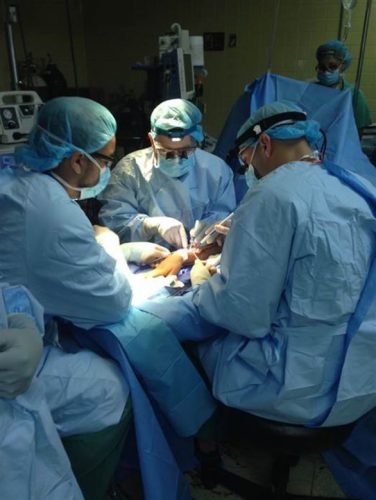
I’ve been accompanying my brother on this kind of journey, as he received a scary diagnosis and underwent a big operation (which went even better than we dared hope, I’m happy to say). His surgery took place at Medical Center of the Carolinas, where we learned about a set of protocols called ERAS – Enhanced Recovery After Surgery. As they walked us through its components, I realized that ERAS is all about stress management – both physiological and psychological stress (the two are inseparable, but we sometimes forget that).

Here are the startling results when a hospital implements ERAS. Stay time drop up to 30 percent, complications drop by up to an astonishing 50 percent and your chance of dying drops similarly. Wow. (I will never have surgery in a hospital that hasn’t adopted ERAS.) One study showed that for a big, open abdominal operation like my brother had, ERAS reduces the recovery time and complications to about the same as if they’d operated laparoscopically (through tiny incisions). As a result of shorter hospital stays and fewer complications, costs go down, often dramatically, which is good for everyone.

Like other kinds of stress management, ERAS starts with education. On our first visit with the surgeon and team, they took their time, gave lots of information and patiently asked for and answered all of our questions. None of the rushing in and out that seems to be so often the norm in medicine. Surprising, considering that his surgeon is so skilled that people come from all over the world for his care.

We were asked to take a “class” (only the two of us were in it), where a nurse quite patiently walked us through all of the possible procedures the surgeon might have to do. She stepped through each post-op day of recovery, detailing what he would be eating, when he’d get out of bed (almost immediately), goals for each day (walk this far, eat this kind of food) and so forth. Even though it was a ton of information, the result was that we had an good picture of all of the possibilities and what they would mean in terms of recovery and possible tubes and drains they might have to put into him. Knowledge reduces stress.

One of the surprises was that ERAS does away with the ban on eating or drinking just before surgery. Although he needed to skip breakfast, they gave him two bottles of high-carbohydrate drinks. One was for the night before surgery, the other was for a few hours before. If you know much about stress, you are aware that it messes with your body’s endocrine system – blood sugar and related hormones. ERAS addresses the physiological stress response by carb loading prior to surgery – much like marathon runners do – and careful blood sugar monitoring afterwards. All of the education also undoubtedly helps manage those levels, since psychological stress also raises your sugar, cortisol and other “stress hormone” levels, which ultimately slow down healing and eventually cause health issues.

ERAS also includes pain management protocols because pain provokes your mind and body’s stress response. When ERAS is used, patients need less pain medication. ERAS even addresses simple things like ensuring that patients are kept warm. There are other, more medical aspects to ERAS (such as preventing blood clots), which aren’t as directly related to minimizing stress response.

The hospital also makes available an app, SeamlessMD, which coaches patients through all of this. I was impressed when I saw that its very first suggestion is to rally your social support. In virtually every study, social support is the most important factor in bouncing back, mitigating stress and thriving under pressure

In short, ERAS encompasses information, nutrition, exercise, social support – these are always the ingredients for resilience and thriving under stress. The big takeaway for me is to reinforce that stress is always physical, mental and spiritual. They cannot be separated. If we want to be more resilient, to thrive under stress and bounce back fast when life tosses us challenges or threats, we need to address mind, body and spirit.

Yes, spirit, also. Although ERAS doesn’t directly address what we’d normally think of as spiritual concerns, it implies a set of values consistent with our spiritual needs. ERAS calls upon hospital staff, patients, their families and friends to be generous with their time, knowledge and support. Although that’s not explicit or part of the research I reviewed, I have no doubt it affects outcomes a great deal.
On Becoming a Wildland Firefighter at 60

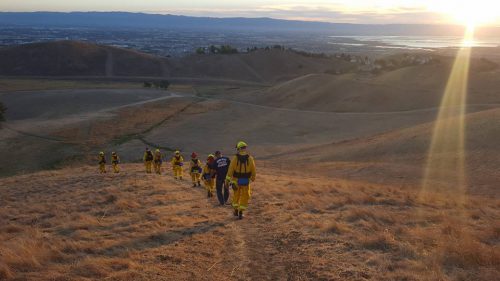
Friends who know me as a software and intelligence product manager and executive have asked how I ended up doing wildland firefighting with Spring Valley Fire Department. Believe me, I’ve asked myself the same question. It tends to pop into my head in situations such as hauling a 45-lb. pack up a steep hill in 90 degree weather and the air filled with smoke. I joke that that’s when I question my life choices. (Okay, it’s not entirely a joke.) Here’s how it happened.

Public safety is not new to me. I took a break from college decades ago and worked a few years as a paramedic. When I returned to school, I volunteered with the Salvation Army’s Emergency Disaster Services, which included feeding and caring for firefighters in Pittsburgh and surrounding areas. One of my friends from that group was a volunteer firefighter who was killed in the line of duty. His funeral had a profound effect on me, particularly the words, “Greater love has no one than this, to lay down one’s life for one’s friends” (John 15:13).

Fourteen years ago I found myself at another line-of-duty-death funeral – for our niece’s husband, a U.S. Marine who was killed in action in Fallujah, Iraq. That helped me realize that I was still carrying a heavy “stress backpack” from things that happened long ago. I met Janet Childs, the director of the Bay Area Critical Incident Stress Management Team (CISM), who helped me begin to let go of some of that weight. I accepted her invitation to join the team, received training and began volunteering in crisis intervention.

One of our CISM team members, who became my mentor and spiritual director, was serving as a fire chaplain for a large agency. When he decided to step down, he asked if I would replace him. After a couple of weeks of debating, I said yes. During my chaplain training, I became friends with members of the CAL FIRE Employee Support Services team. I was part of a group of chaplains who responded to the Rocky Fire in Lake County in 2015. The enormous Valley Fire, also in Lake County, started a short time later and CAL FIRE hired me as a contractor for peer support.

After the Valley Fire, I decided I wanted more wildland fire training, for safety’s sake, so I joined the local CAL FIRE Volunteers in Prevention program. Our duties include operating a mobile command vehicle (I have a ham radio license, which is part of skills required), staffing the Copernicus Peak fire lookout tower (the highest point in the Bay Area, a wonderfully relaxing place) and various public relations events.

Meanwhile, satisfying jobs in product management seemed to become much more difficult to find. I’m most at home in smaller companies and turn-around situations. The problem with those is that the company will nearly always either outgrow me or fail. Either way, I was getting laid off every few years. At some point, I decided that I was done with the high-tech industry, at least as a product guy. I am looking at bringing stress management and resilience wisdom from public safety into the private sector. It’s needed.

Ten years ago, I first met Spring Valley Fire Department, which protects about 200,000 acres of wildland east of Milpitas and San Jose. I led a critical incident stress debriefing for firefighters involved in a difficult response to a traffic accident. The debriefing became horribly memorable – I had asked a Santa Clara County firefighter to assist me, but he decided he needed a “mental health day” instead. While we were doing the debriefing, while bicycling, he was struck and killed by racing motorcyclists.

I joined Spring Valley last spring after talking to a couple of the chiefs while I was recruiting for the CAL FIRE VIP program. Since CAL FIRE was hiring me periodically for peer support at big fires, I wanted more training and experience with wildland fire. I didn’t realize that although Spring Valley is primarily a volunteer fire department, our firefighters can work for pay covering CAL FIRE stations when extra help is needed. (This year, a whole lot of help has been needed compared to past years.) I jumped at the opportunity. Meanwhile, I’ve also qualified as a federal firefighter/EMT to be able to work as a fireline EMT for Wilderness Medics, but I’m still waiting for my first assignment.

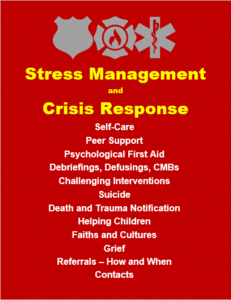
Along the way, I published the Pocket Guide to Stress Management and Crisis Intervention, which is now used by hundreds of public safety agencies, became an instructor for CISM, CPR and related topics, and I’m working on a book titled “The Resilience Recipe.” I’m thinking the subtitle might be “Your Brain Will Do That,” because it is mostly about how our brains respond to stress and trauma, and what they need in order to bounce back (spoiler – we need physical, social and spiritual connections).

Those are the events that led me here. At the risk of boasting, I’ll say that it’s been difficult, physically and mentally. Wildland firefighting is extremely demanding – we have to be able to do hard work in extreme conditions. At 61, it was no easy task to get in shape to be any good at all (and I won’t pretend that I’m anything more than adequate). To qualify for federal incidents, I had to pass the “Arduous Work Capacity Test” – hike (no running) three miles in 45 minutes carrying a 45-lb. pack. Although it’s not that difficult for a young person in good condition, the first few times I tried it, I wondered if I would ever get there.

When I look back at the physical training I’ve maintained over the last two years – typically hiking 2-3 miles with a heavy pack at least every other day, weight training at the fitness center every other day – I’m somewhat amazed. Although I was a backpacker and rock climber in my 20s and biked to work for a while, regular exercise was never much more than the thought, “I should do that one of these days.”

To be honest, I was somewhat scared into this self-disciple. A couple of years ago, to my surprise, a routine physical showed that I was pre-diabetic. The exercise has really paid off – my blood sugar is nearly normal and my doctor says I’m the healthiest 61-year-old he has seen. That doesn’t mean I can keep up with the 20- and 30-year-olds I’m working with, but I hold my own. And I keep looking for ways to do better. For motivation, all I have to do is recall hiking up a steep hill with a heavy pack at a fire.

In my writing and teaching, I’m focusing on resilience – our ability to bounce back from adversity. I’ve learned that stress and trauma are enemies of resilience because the “alarm center” in our brains, triggered by stress, will drown out our sources of willpower and motivation unless we do things to quiet it.

Without everything I’ve learned and done about managing stress and unpacking the trauma backpack, I’d never have been able to stick to the discipline that has enabled me to beat back diabetes and become a wildland firefighter/EMT at nearly 62 years old.

What Hiking Does To The Brain Is Pretty Amazing

Michael W. Pirrone reports on Wimp.com about new studies of the effects of hiking on the brain.

Excerpt: “According to a study published last July in Proceedings of the National Academy of Sciences, a 90-minute walk through a natural environment had a huge positive impact on participants.”

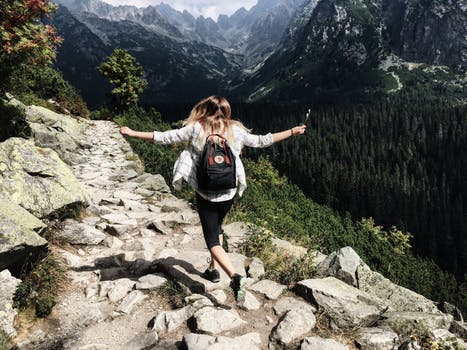
The article reports that hiking in nature lowers brooding and obsessive worry, increases creativity, helps you focus, gives you energy and strong self-image.

© 2026 Through the Smoke

Theme by Anders NorenUp ↑