Seeing Systems, Finding Home

Category: Connecting (Page 1 of 3)

Living Disconnected

Excerpted from “Stress Into Strength: Resilience Routines for Warriors, Wimps and Everybody in Between.”


Don’t beat yourself up for feeling stressed, anxious, and not resilient enough – you are far from alone. Although we are living in the most technologically connected culture that has ever existed, many of us are sorely lacking habits that address isolation, inactivity, and meaninglessness. Many are so disconnected from stress recovery that they don’t even know what is missing. They just know they are anxious and saddest of all, lonely — some profoundly so.

City, People, Street, Night, Lights, Man, Dark, Lonely


An astonishing 40 percent of American adults report feeling lonely. Millions of people, especially men, have zero close friends. Loneliness rates have doubled since the 1980s. Ask a therapist what problems walk into their offices each day and you will hear that loneliness and anxiety top the list, by far.

Loneliness is lethal. Researchers have found that it dramatically raises heart disease and stroke rates, increasing your risk of early death by 30 percent, taking an average of 10 years off your lifespan. It is also expensive – the U.S. government spends an estimated $6.7 billion annually to address social isolation in older adults. Vivek Murthy, the former U.S. Surgeon General, says that the most concerning health issue in the United States is not cancer, heart disease or obesity. It is isolation.

Our disconnection is not just social. We have also abandoned routines for physical and spiritual exercise and recovery. Compared with our predecessors, we work out less, eat worse, get less sleep, gain more debt, pay to store more stuff, and generate more trash. We are more cynical, less inspired, and motivated. We skip reassuring rituals and “go it alone” rather than be mentored or mentoring, while allowing money and power to trump morality.

Trapped in the perpetual stress of fearing stress, while disconnected from sources of recovery, we become increasingly reluctant to take on the challenges that we need to stay strong, grow and bounce back after adversity.

Every one of the social and psychological causes of depression and anxiety… has something in common. They are all forms of disconnection. They are all ways in which we have been cut off from something we innately need but seem to have lost along the way

Johann Hari

We tolerate disconnection because it can yield a certain success – for a while. Compromising social and family life, workouts, and values, allows us to work long hours, make money and get promoted, gaining power and prestige. This doesn’t end well. Eventually, life presents difficulties that cannot be solved with money or power (although they enable formidable distractions).

Past generations had more stress recovery built into daily life. Shared meals, entertainment and work were the norm. Long commutes were impractical, schools and jobs were local, so people worked and went to school with friends and neighbors. Less automation and more expensive energy demanded more activity. Processed and junk food were less available. Churches and social clubs, now starving for members, were part of the majority’s lives, solidifying community connections.

Today, we have the most powerful information-sharing system in history, the Internet. However, our negative bias is at home there; most of what we share and read is shocking news, gossip, and posturing, poisonous to healthy relationships.

Research shows that the same content in an email and in in-person dialogue sounds less polite in the email.

Amit Sood

We face new threats – global terrorism, mass shootings, job insecurity, enormous debt, climate change. Institutions — political, religious, academic, media — have lost much of their trust and authority. Greed, extremism, and scandals have created a void of wisdom, meaning, values, morality, and purpose. Few cultural leaders have hesitated to capitalize on fear, amplifying our stress reactions and feeding the vicious cycle of disconnection.

Threatened by modern fears, adrift and uninspired, we naturally react with fight-or-flight. Some fight by trying to become more self-sufficient; these are the libertarians and “preppers,” expecting apocalypse. Others flee via distractions and indulgences to mask worries and helplessness; illness, addiction and bankruptcy too often result. As long as we keep fighting and fleeing, disconnection deepens.


We are not likely to forget that we sometimes must fear or distrust strangers. We need to know, thoroughly and intuitively, that although some people will neglect, reject, and hurt us, we are not alone. We need to care and be cared for.

We are unlikely to forget that the universe has diseases and dangers that can injure and kill us. We need to know, thoroughly and intuitively, that the physical world is our home, nourishing and sustaining us. We are creation’s beneficiaries and stewards.

Few of us will forget that we are far from perfect. We need to know, thoroughly and intuitively, that we are forgiven and accepted as we are, one body of humanity even as we are individuals.

More than we need reminders of what to fear, we need to give and receive reminders of gratitude and generosity. We need five or ten reminders of what’s good in life for every reminder of what’s not.


Deep disconnection – having little or no sense of belonging just as you are – makes isolation, physical pain and meaninglessness feel permanent or intolerable. Dysfunction and addictions follow.

In this environment, calls for “trigger warnings” (which research suggests don’t work) and bans on “micro-aggression” are not surprising. If you see stress as a problem to avoid, it makes sense to hold others responsible for causing it. However, your difficulty coping probably has far less to do with their behavior and is more the result of disconnection from sources of recovery, healing and growth.

A culture of avoiding stress weakens everyone. “Stress-free living” is an oxymoron. When we advocate the goal of eliminating stress, we should not be surprised at the rise in addictions, distractions and the ultimate “stress reduction” — suicide, which has risen 24 percent in the last five years.
Resilience routines are antidotes to fear-based thinking and acting because they nourish and strengthen us in body, mind, and spirit. They can help you heal from the past, cope with the present and prepare for a better future.


To thrive in the 21st century, we must be more intentional about connection and recovery from stress than our parents or grandparents. We need to discern what truly threatens us and what does not, replacing the vicious cycle of fear, distraction, and disconnection with a virtuous cycle of connection and recovery.

It would be unfair to make these observations without acknowledging that racism, discrimination, circumstances, and privilege result in uneven opportunities to make the kinds of connections that build resilience. If you are struggling for basic survival, resilience routines may seem out of reach. If you are working multiple jobs just to make enough to pay the rent, eating well, getting exercise, and getting enough sleep may be impossible. That’s realism. However, resilience also calls for optimism, to have faith that even though the way forward individually is bleak, great transformation happens when many of us take small steps forward. Learning resilience is subversive, ultimately destructive to organizations and institutions that misuse or abuse their constituents.


A resilience framework – connecting up, down and around

All of us are surrounded by sources of strength, resistance and resilience.  The better connected we are, socially, physically and spiritually, the more stress and challenges we can handle.

You’ll see this theme repeated in my classes and writing. For example, last month, I mentioned “Look up, look down, look around,” which is a wildland firefighting safety lesson about watching out for danger, which inspired this way of looking at resilience. In my pocket guide, Stress Management and Crisis Intervention, the theme of connecting in three dimensions repeats – out, in and up; mind, body, spirit; attitudes, activities and values.

Look around and you see social support, which psychologists repeatedly find has the strongest correlation to our resilience under stress and after trauma. Our co-workers, friends, family, mentors and other supportive people are our first line of strength when challenged or psychologically injured.

Look down and you see your body and the earth – your physical presence in creation. Through activities like yoga, exercise, sports, singing and dancing, we build and maintain connections to ourselves and the physical world. Our minds and bodies are inseparably linked when it comes stress. For example, science has found that a physical measurement, heart rate variability (HRV), correlates to both psychological and physical resilience. HRV is amazing in one respect – it doesn’t just measure your resilience, you can actually improve your ability to handle stress through biofeedback that increases your HRV. If that doesn’t convince you of how intimately our minds and bodies are linked, nothing will.

Look up and be reminded that the universe is vaster than we can comprehend, that as much as we can and should try to dissect and understand it, awe and mystery transcend logic and rationality. Spirituality in this context has to do with values and meaning, which often comes from religious beliefs.

(I included links to the Mayo Clinic web site because unlike so many stress management books and articles, they offer advice that embraces all three dimensions. Their books on stress and resilience are among the few that I recommend.)

When you are connected to these sources of strength and resilience, you know them – and they know you – with your body, heart and spirit. This is a kind of knowing that is beyond familiarity, information or even wisdom. It is a knowing that only arises from living in true relationships. It is knowing the way you know your spouse, your work, your community, your beliefs. This is the knowing that you can never completely put into words.

Looking at resilience as the result of our connections is simple and powerful. It explains our hunger for social media, as well as why it doesn’t truly satisfy (the connections are shallow and often deceptive). It shows why one-dimensional “stress management,” which usually focuses only on the physical, rarely succeeds. It helps us know where to focus when our resilience is low.

The biggest obstacle to connecting is distrust, especially when that distrust was learned at a young age. We all learn, to some extent, that we cannot trust other people, the universe or the divine, so we disconnect and become wary. If we have been deeply betrayed, some of these connections can seem threatening, even terrifying.

Distrust keeps us stuck in the “Ds” – discipline, domination, deception, drama, delay, docility, demandingness, or defiance. We are stuck socially when we don’t have people we can be real with. We are physically stuck when our health prevents us from exercising or experiencing nature. When forgiveness seems out of reach, for ourselves or others, we are spiritually stuck.

When we see and choose how to restore and nurture our weakest connections – which can be very difficult – we move from the “Ds” into the “As” – accepting, accompanying, attending, allowing, authenticity, affection, and agreement. The essence of resilience is how well we build and maintain the attitudes, activities and values that feed these qualities.

What Hiking Does To The Brain Is Pretty Amazing

Michael W. Pirrone reports on Wimp.com about new studies of the effects of hiking on the brain.

Excerpt: “According to a study published last July in Proceedings of the National Academy of Sciences, a 90-minute walk through a natural environment had a huge positive impact on participants.”

The article reports that hiking in nature lowers brooding and obsessive worry, increases creativity, helps you focus, gives you energy and strong self-image.

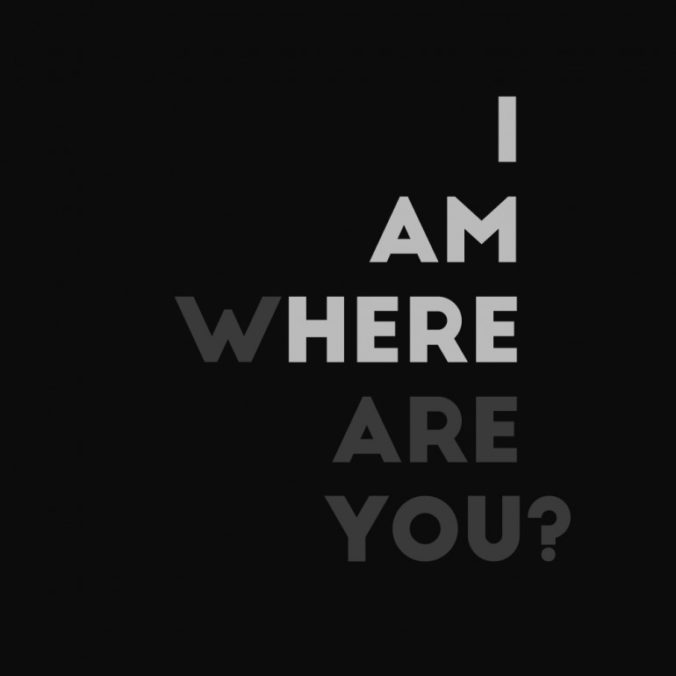
Where Are You? Reflections on California Fires

(Message delivered at New Creation Lutheran Church, Sunday, December 17, 2017)

“Where are you?” That’s the first thing God says to a human being in the Bible.

Then the man and his wife heard the sound of the Lord God as he was walking in the garden in the cool of the day, and they hid from the Lord God among the trees of the garden. But the Lord God called to the man, “Where are you?”

He answered, “I heard you in the garden, and I was afraid because I was naked, so I hid.” (Genesis 3:8-10)

Throughout the Bible, God asks people questions, but I think we can be sure it is never because God is hungry for information – God knows the answers. We need to be asked.

We call this story in Genesis the “fall from grace” or “original sin.” We talk about it as our disconnection from God – that’s what the word “sin” means.  But as I have studied faith, psychology and neurophysiology for crisis intervention, peer support and chaplaincy, I have come to see that we need three dimensions of connection. All three become broken in the Genesis story.

The first disconnection is social. Adam, Eve and the serpent, rather than supporting each other, talk each other into doing the wrong thing.

The second is physical. Childbirth and food production will be painful; Adam and Eve will “return to dust,” becoming part of the earth that they were taken from.

The third disconnection is spiritual – they are banished from the garden and no longer have access to the tree with knowledge of good and evil, the tree of life. They no longer walk with God in the garden.

God’s question, “Where are you?” is about relationships. Where are you socially – your relationships, knowing your friends and neighbors? Where are you physically, in relationship with creation, knowing yourself, your body and the earth. Where are you spiritually, in relationship with the divine, knowing what is right and wrong?

I teach this by inviting people to think of them as directions. In wildland firefighting, one of our safety mottos is “Look up, look down, look around” – keep your head on a swivel so you will be aware of all of the things that can hurt or kill you in that dangerous environment.

Look around and you see your social support, which psychologists repeatedly find has the strongest correlation to our resilience under stress and after trauma.

Look down and you see your body and the earth – your physical presence in creation.

Look up and be reminded that the universe is far more than we can comprehend, that as much as we can and should try to dissect and understand it, awe and mystery transcend logic and rationality.

Jesus points to these dimensions when he answers the question “Which is the greatest commandment in the law?” He replies: “Love the Lord your God with all your heart and with all your soul and with all your mind… And the second is like it, ‘Love your neighbor as yourself.” (Matthew 22:36-40). Your neighbor, yourself and God – social, physical, spiritual. How are your connections to them?

Although my primary work with CAL FIRE and others is called “critical incident stress management” or “peer support,” it is really about disconnection and connection.

When God asked Adam “Where are you?” Adam said he was afraid, so he hid. Fear leads us to disconnect from others, the physical world and God.

Fear is powerful. One of the most surprising recent discoveries about stress showed that it is only toxic to your health if you are afraid that it is. A big study about stress over 10 years found that people who had the highest stress level, but did not believe that stress is bad for your health, were least likely to die. (In a wonderful “coincidence,” the church’s theme on the day I offered this message turned out to be 1 John 4:16 – “Perfect love casts out fear.”)

I have never found anything in the Bible that suggests that when life becomes challenging, the answer is be “stress reduction,” which research shows rarely works anyway. The Biblical response to stressful situations is repeated hundreds of times – “Don’t be afraid.” The words that usually follow are, “I am with you.” Relaxation is not the opposite of distress; connection is. Even when Jesus retreated to the wilderness, it was not to disconnect, but to re-connect. Solitude is not the same as isolation.

Whether I respond to a fire as a chaplain or with CAL FIRE’s employee support team, our job is to be present for people to talk to and connect with. Most of it is quite informal, after things really go out of control, we also lead formal crisis interventions. We primarily serve the firefighters, but we have always also been available to other responders and the public. We ask a lot of questions, even though we often know, in a general sense, what the answers will be. In fact, after 15 days on the fires in the North Bay, I felt as though I had heard the same two stories – the citizen story and the responder story – hundreds of times.

For the citizens, it was a story of being woken in the dead of night, wondering if they would escape from a terrifyingly fast-moving fire. The story included many heroes – people who risked their lives to wake up their neighbors and help do things like figure out how to open a garage door when there was no power.

For the responders, the story was about staying awake for more than four days until there was finally enough help that they could take a day off. They talked about embers the size of basketballs blowing a mile or more ahead of the fire; falling asleep holding a nozzle or dozing for a few minutes in their engines only to be woken by someone pounding on their windows and yelling for them to get out because the fire was nearly on top of them. They described situations where it was their job to rescue people they could not reach, and wondering over and over if they would survive themselves.

One thing we never ask is, “How are you doing?” The answer is almost always, “Fine.” To our team, FINE stands for Frustrated, Insecure, Neurotic and Emotional. We don’t let each other get away with that answer, either.

Whether I was talking to citizens or firefighters, all it took for the stories to start pouring out was to say something like, “I know I can’t possibly understand how this is for you, but it’s got to be very hard.”

In this kind of situation, as people talk about what happened to them, we mostly listen, acknowledging and normalizing their reactions. We offer some education and resources to help them get through the crisis. In Santa Rosa, we also had the privilege of handing out $100 gift cards that the firefighters union provided.

Some of the tougher moments came as people talked about their neighborhoods and friendships, realizing that they had not just lost their homes, but entire communities. Along with the physical losses, that is an enormous loss of social connections.

For many of the firefighters, one of the hardest parts was hearing all of the thank-you’s from the community. Like all public safety people, we are perfectionists – the minimum passing score on our job is 100 percent. So it is very difficult to have a person who is sifting through the ashes of their home say “Thank you.” For me, it was most difficult of all when that person was a firefighter. After doing this kind of thing for more than a dozen years, I’m rarely at a loss for words. But for the firefighters who lost their own homes, I had nothing but big hugs. And that’s okay.

For a few days, there was a crowd of a couple of hundred people just outside of the fairgrounds where the base camp was located. They had signs and noisemakers and they would cheer loudly when we drove by, heading out to the fire. I was so overwhelmed that I couldn’t even look at them to thank them or say, “You’re welcome.” More than 8,000 homes were lost in the North Bay. Forty-two people were killed. I had to remind myself, just as I urged other responders, to remember that so many homes and lives were also saved.

In our peer support response, we did something new – we called in every dog team we knew about. At earlier fires, especially in Lake County two years earlier, we’d seen how effective dogs can be.

We saw firefighters, EMTs and dispatchers relax and open up as they petted and played with the dogs. I had a CAL FIRE captain as an instructor a couple of weeks ago. He told me that he was exhausted and irritable, doing paperwork, when one of our dog teams approached him. “Go away, I don’t have time for this,” he thought. Two minutes later, after petting the dog, he said he was relaxed and grateful that they were there. That’s what we want to hear.

If there’s a Biblical model for crisis intervention, it is the story of the disciples on the road to Emmaus. They are in deep grief because their friend and teacher, who they thought would become their king and savior has been crucified. They don’t believe the stories of the women who claim to have seen him.

Jesus could have appeared to them as himself and cleared everything up immediately. But instead, he appears as a stranger who doesn’t know what’s been going on. “Are you the only visitor to Jerusalem who doesn’t know the things that have happened there in the last few days?” one asks (Luke 24:18). Like God in the Garden of Eden, he asks a question  – “What things?” – even though he already knows the answer. He doesn’t need information; they need to tell their story. Like in the Garden, the story falls short of the full truth – they have the facts right, but the bigger perspective is missing, so he reminds them of the Biblical prophecies of death and resurrection. They don’t finally recognize him until he joins them for dinner and breaks the bread – the symbol of his sacrifice.

The question, “Where are you?” seemed especially meaningful in the aftermath of these fires because I think that we tend to discount the importance of our connections to the physical world – our own bodies and the earth. We don’t eat well, we don’t exercise enough and we have greatly isolated ourselves from nature. And because we don’t appreciate nature deeply, we have been building homes in places that are highly vulnerable to this kind of disaster.

So I invite you to tackle God’s first question – where are you? We need to answer it often. Where are you in your relationships with neighbors, yourselves and God?


Pocket Guide to Stress Management and Crisis Intervention

Until now, nobody has offered a pocket guide covering all of the protocols and methods that we use in stress management and crisis intervention.

Good news! Now there is one.

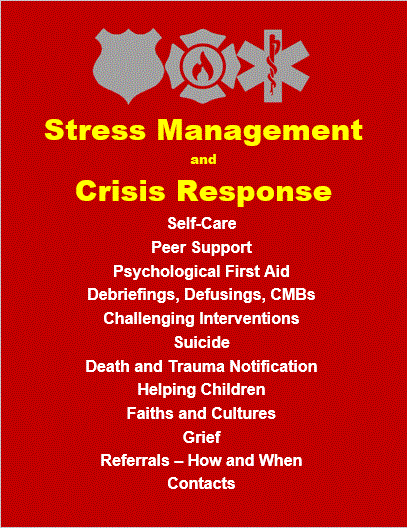
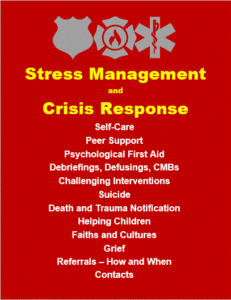
I have written and published a 60-page pocket guide (spiral-bound with durable, Stress Management and Crisis Responsewaterproof covers), including essential references for self-care, peer support, psychological first aid, critical incident stress management (CISM), suicide, death and trauma notification and more. I’ve included sections on helping children and grieving people, and what to keep in mind when dealing with various faiths and cultures – the essentials to review and remember.

In the back of the book, I’ve included a guide on when and how to make referrals, with contact information for national crisis lines and online resources, plus plenty of space for you to write in your own contact and referral information.

For more information, including the Table of Contents, see the Pocket Guides page, where you’ll also find testimonials from the expert reviewers who helped me ensure that this is  a high-quality reference guide.

You can order the guide on Amazon, where you will also find a Kindle version.

The danger of “nobody else can understand”

If you are in public safety or the military, as well as some other fields, you know that some people insist that there it is pointless to talk about work to any “outsider.” Often, big agencies have this attitude toward smaller, less busy, ones –  “We are the only REAL firefighters, police, medics, etc., around here.” So they close themselves off from  support by people who otherwise might be peers.

The walls even go up within agencies – specialized, elite teams form a “tribe” mentality that says if you haven’t been part of a similar unit, there’s no point in talking to you about stresses and challenges, even if do the same kind of job.

No doubt, there is some truth to this. Working at a big, busy, urban agency certainly is different from smaller ones. Combat experience absolutely has unique aspects. Being part of an elite or specialized team really is different. People who haven’t walked the walk truly cannot understand. Experience is the only instructor – words quickly fail if we were to try to fully communicate it, especially the emotions around high-stress events (which can directly impact the brain’s speech center).

For a number of years, I have suspected that organizational isolation – that’s this is about – could be as toxic as individual isolation. We know that social support is the most important factor in resilience under stress or recovery from trauma; isolation aggravates stress. In fact, almost any trauma expert will agree that people will continue to suffer as long as they remain isolated –  connections with others give us strength and healing.

I recently began reading Ellen Kirschman’s book, I Love a Fire Fighter: What the Family Needs to Know, which has been sitting on my nightstand for a while. Dr. Kirschman, a well-regarded therapist in public safety, is also regularly involved in the West Coast Post-Trauma Retreat, where I have volunteered and learned.

Here’s the light bulb that went off as I read Kirshman’s introduction – the “nobody else can understand” attitude cuts us off from our friends and family. If you are certain that even a co-worker who isn’t part of your elite unit can’t support you because “they don’t understand,” then how can your friends and family who are civilians, possibly support you?

Here’s one of Kirschman’s observations about going through a fire academy (emphasis mine).

No one acknowledged how the emotional courage fire fighter families need or the independence that is forced on them contributes to the fire service mission. This is extremely puzzling in light of the many studies that confirm how family and friends are the heart of a fire fighter’s emotional support system.

Her books (she wrote a similar one for law enforcement) are for families, but the message to public safety is just as important. Your social support outside of work is also critical to your strength and resilience in the face of occupational stresses, and recovery from critical incidents and other injuries that aren’t physical.

The following words are why it does not matter that outsiders can’t understand the job.

Empathy does not require understanding.

It’s true – if you are an outsider, you will not understand. If you’ve never been there, I can’t explain what it was like to talk to a patient one minute and then do CPR on him, unsuccessfully, the next. You won’t understand how difficult it was to walk past his wife in the ER waiting room, seeing her comforting another wife, not knowing her own husband was just pronounced dead. If you’ve never done anything like helping a family bury their dogs who couldn’t escape a wildfire, nothing I can say will make you understand. If you haven’t been part of a rescue that went all wrong and killed the victim, I don’t have words for the emotions. If you haven’t done shift work, you don’t know the toll it can take.

Even if you cannot understand, that doesn’t have to stop you from supporting a responder if you are a trusted friend – because empathy does not require understanding. They may spare you details. They probably won’t repeat the sick jokes that helps many get through the day. But if you are willing to simply walk beside them, your presence can be healing.

You don’t need to understand responder experiences to know that they are painful. You don’t have to work shifts to that it is hard to be exhausted and miss family events. Everyone has experienced pain and frustration, he stress of an event or life going out of control. Co-workers can appreciate it more than outsiders, so co-workers are an essential part of any responder’s network of social support. So are spouses, friends with completely different careers, pastors and may others.

Camaraderie is powerful. Every agency – and groups within them – benefits from friendships, mutual support and teamwork. However, the idea that only our co-workers or people like them can support us is a misguided obstacle to wellness. We should not want anyone, from new recruits to  seasoned veterans, to believe that their friends and family have little to contribute. As Ellen Kirschman says, that idea cuts t them off from the heart of their social support system.

Paramedics with social support sleep better

An article in the Journal of Occupational Health Psychology earlier this year described a one-week study of paramedics’ sleep and their social support. Those who saw themselves as having more social support reported better sleep. The researchers also observed that the sleep quality of paramedics who perceive more support isn’t as impacted by job stress.  On the other hand, they reported “Those with low levels of support displayed poor sleep quality in the face of high occupational stress.”

In recent years, it has become quite clear that good, deep sleep is vital for coping with stress – poor sleep is associated with increased risk of developing PTSD.  The correlation between social support and coping with stress has also been observed repeatedly in studies. It’s unsurprising to find a link between social support and sleep quality – this reinforces the importance of both.

News report: Meditation reduces stress, changes your brain

Many studies have shown that meditation can be a powerful way to reduce anxiety and raise the body systems that calm us down after exposure to stress. The Washington Post last May reported findings of Sara Lazar, a neuroscientist at Massachusetts General from brain scans that showed that some parts of the brain expanded and others became smaller after sustained meditation.

This is part of a big change in thinking about our brains, which until recently were assumed to be fixed, unchangeable. Now we we have a word for the brain’s ability to change – neuroplasticity – as well as increasing evidence about what kinds of attitudes and activities encourage positive changes.

Don’t take that bite! Dogs, diets and heart rate variability

Two new reports related to heart rate variability (HRV) reveal more about its significance as a measure of our physical and emotional health. Higher HRV is associated with better stress management. It is a way to peek into the state of a person’s nervous system, particularly the vagus nerve, the mind-body information superhighway. The more active your vagus is, the better you are at coping with stress. It is the neural path through which your “rest and digest” system signals your “fight or flight” system to calm down.

One new article reports that people with high HRV can more easily resist temptation when dieting. Greater self-control of that kind is also linked to better psychosocial and physical health.

HRV is similar in other mammals, so another researcher looked at the relationship between HRV and aggression in dogs, hoping that HRV might predict how aggressive a dog is likely to be. Just as humans with high are better at resisting that extra slice of cake, perhaps dogs with higher HRV would be better able to resist taking a different kind of bite.

The resulting article reports that indeed, less aggressive dogs had higher HRV.  “Dogs with bite histories had significantly lower HRV” and owners who reported that their dogs were aggressive also had lower HRV. The researcher’s work suggested that HRV could be an objective way to measure the effectiveness of dog training that is intended to reduce aggressiveness.

Paper: Mindfulness helps elementary students with stress

Researchers at the University of Colorado taught mindfulness techniques to a class of Denver 4th graders, who practiced it daily during homeroom check-in for 10 weeks. After comparing those students to a similar class without mindfulness, they reported improvements in pro-social behavior, emotional regulation and academic performance for those who practiced it. Their conclusion?

Mindfulness in urban classroom settings as a feasible option for students to help with personal stress and coping, as well as emotional and behavior regulation in schools and at home.

The methods came from two sources of mindfulness curricula for children:

  • MindUp, from the Hawn (as in Goldie Hawn) Foundation
  • Mindful Schools, which came out of a project in Oakland, California

Related: Mindfulness Goes to School: Things Learned (So Far) from Research and Real-World Experiences.

« Older posts

© 2026 Through the Smoke

Theme by Anders NorenUp ↑